

Why Starting a Mission
The Reason Behind This Newsletter

When I look back over my career so far, I often think about how unusual my vantage point has been. I don’t operate a camera, I don’t direct the scene, I’m not the person who writes the words that actors deliver. My role has mostly been in the background — in the workflows that carry images from where they’re captured to where they’re crafted into stories.
It’s not the glamorous end of filmmaking, but it has given me an extraordinary perspective. I’ve had the chance to sit in the middle of processes that connect the creative vision on set with the teams downstream who shape and finish that vision. From that position, you see a lot. You see how fragile the creative chain can be, but also how resilient it becomes when the right systems are in place.
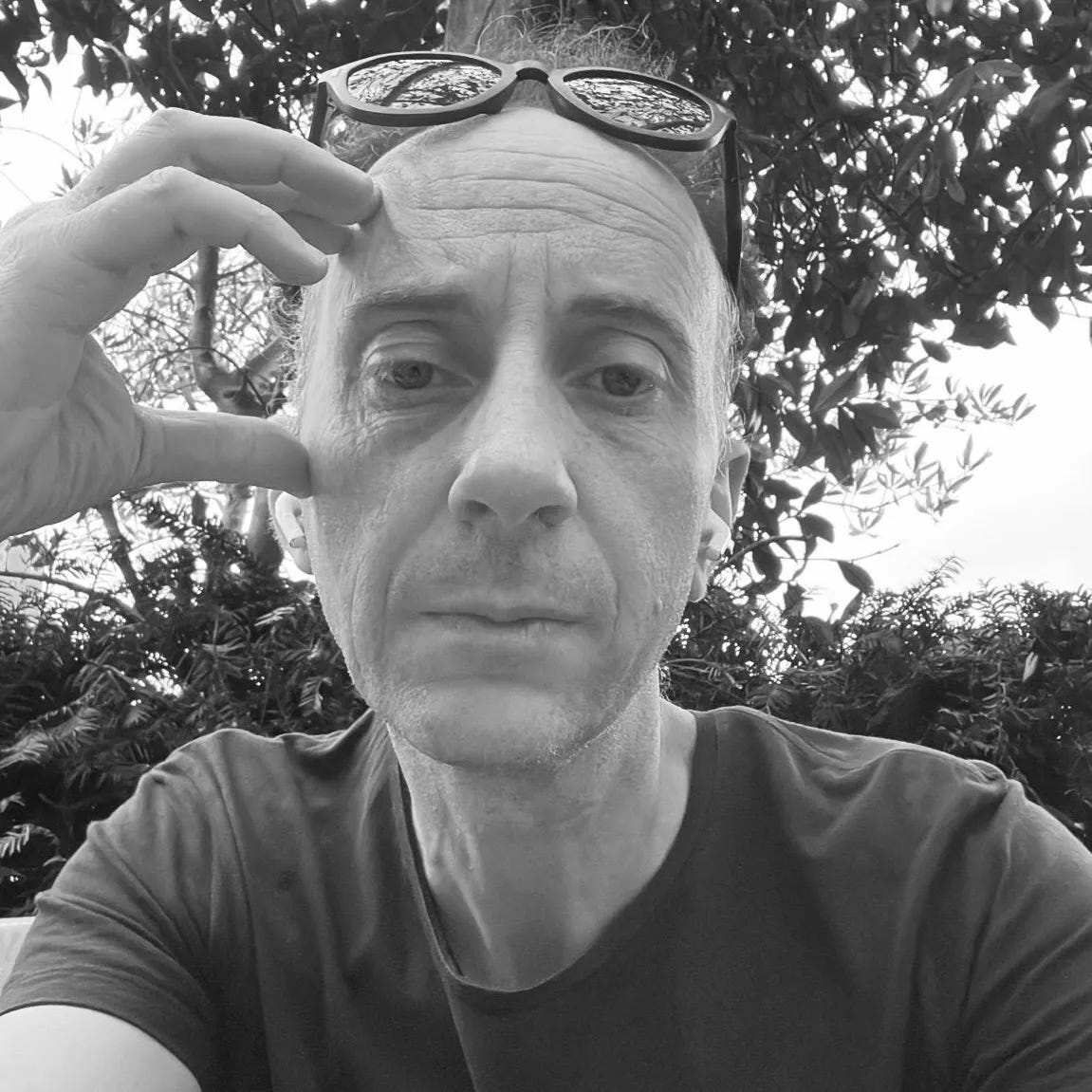
Learning from great filmmakers
Along the way, I’ve been fortunate to work with a wide spectrum of talent. Some are legendary cinematographers — people like John Mathieson, Seamus McGarvey, and Roberto Schaefer — whose images have defined entire eras of cinema. Others were at the very start of their journeys when I first met them, still finding their rhythm and their voice.
One of my fondest memories is from an early project that James Friend shot. At the time he was an emerging DP, quietly honing his craft. Fast forward to today and James holds an Academy Award for All Quiet on the Western Front. Watching that progression, from smaller productions to global recognition, is one of the joys of being in this industry. It’s also a reminder of how important the invisible parts of filmmaking really are.
Because whether you’re an Oscar winner or just starting out, the truth is the same: when workflows are strong and invisible, creativity flourishes. When they break down, intention is lost. And intention is everything.
The hidden system
That word — invisible — is important. The better a workflow is, the less anyone thinks about it. Which means the people responsible for it often remain in the background. Files arrive where they should, in the right format, with the right context. Nobody celebrates the metadata that ensures that happens. But when it’s missing, or inconsistent, or lost in translation — that’s when chaos takes over.
What I’ve seen, time and again, is how much energy is wasted because the invisible is overlooked. Projects duplicate work. Creative teams second-guess decisions. Time and money are lost.
Too often, people chase what looks like the cheaper option, without asking the more important question: will this actually save money in the end? In workflows, as in life, the quick fix usually costs more. The discipline of getting it right — of investing in the invisible — is what ultimately saves time, money, and creative intent.
That’s what fascinates me: the idea that such a small, hidden thing quietly shapes the outcome of work at the highest creative levels. Metadata is the connective tissue that ensures the story being told survives the industrial process of making it.
A unique vantage point
I don’t think there are many companies or individuals who get to see the sheer range of productions that Mission and I have. That doesn’t make us special, but it does give us perspective. We see patterns repeat themselves across budgets, across genres, across geographies. We notice where things break, and we notice when things sing.
It’s from that vantage point that I feel a responsibility to share what I’ve learned. Not as a set of rules, not as a technical manual, but as a series of reflections. I want to explore the systems that too often go unnoticed, and ask why they matter.
Why character matters
For me, the most important stakeholder in any project is the script. I’m obsessed with character — with the relationship an audience builds with someone on screen.
It might be Captain Ahab, Holden Caulfield, or Lyra Belacqua. It might be a hero, a villain, or someone we don’t know how to feel about. But what I’ve learned is that the character isn’t always a person. Sometimes it’s the music. Sometimes it’s the colour. Sometimes it’s the silence between lines. These things take on a life of their own, and they become characters in the story.
That’s why I care about workflows. Not for the sake of efficiency or technology, but because those hidden systems are what protect character. And if character is lost, the story is lost.
Why
Starting a Mission
That’s what this project is about. Starting a Mission is not just the story of one company, or one product. It’s a broader exploration of how creativity, technology, and commerce intersect — and how something as humble as metadata quietly underpins it all.
I’ll be writing about lessons learned from productions, from filmmakers, and from building technology. Some of these posts will be stories from the field; others will be reflections on what metadata can teach us about collaboration, trust, and change. Taken together, they’ll form the basis of a book I’m writing under the same name.
For now, this Substack is the place where I’ll share the ideas in progress. Think of it as an open notebook. I’ll publish essays here, and eventually weave them into a narrative that holds together as a book. You’ll see the rough edges. You’ll see experiments. And, I hope, you’ll see a conversation take shape.
An invitation
My hope is that this won’t just be me talking into the void. I’d like this to be a conversation. If you’re reading this because you work in film, television, games, or any creative field — I’d love to hear your experiences. If you’re here because you’re curious about how invisible systems shape creative work, then I welcome your perspective too.
Starting a Mission is exactly that: a beginning. It’s a chance to shine a light on the hidden, the overlooked, and the essential. I don’t pretend to have all the answers, but I do believe the questions are worth asking.
So thank you for joining me. Let’s see where this mission goes.